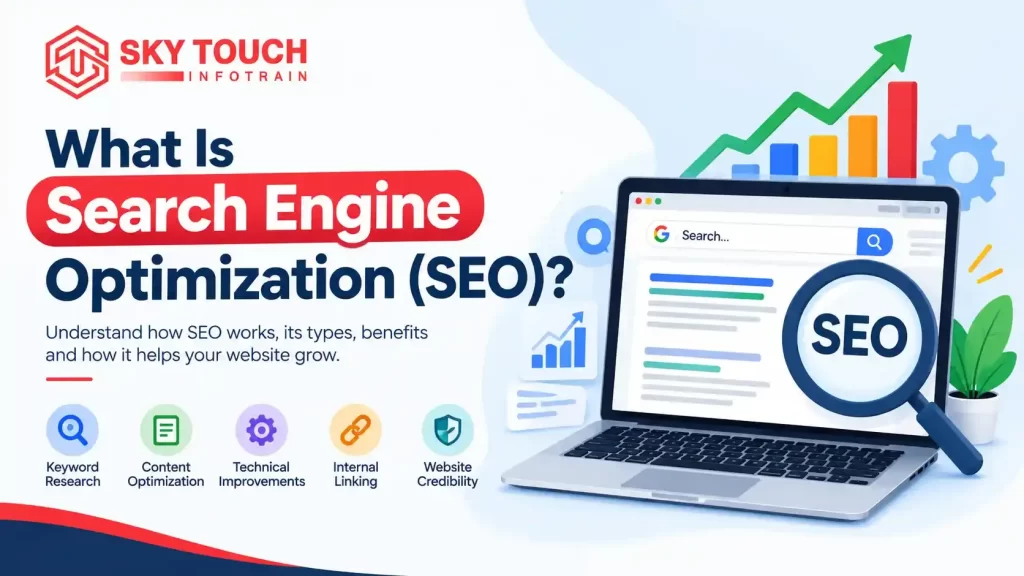
What is SEO? Search engine Optimization (SEO) is the practice that makes certain that the content of your website is crawlable and understandable by the search engine (e.g., Google and Bing) and therefore, your site pages will be indexed accordingly. It ensures traffic from the search engines in terms of qualified visitors, meaning people who will eventually convert into clients, without costing money per click.
For instance, if someone in India searches for a digital marketing company in Noida or a business owner in the USA searches for SEO services, optimized web pages have a chance to appear in relevant search results.
What Is Search Engine Optimization? It is the process of improving a website’s visibility in organic search results. SEO involves several activities, including keyword research, content optimization, technical improvements, internal linking, and building website credibility. It is an ongoing process that combines useful content with a technically accessible website and a clear understanding of what users need.
How Does Search Engine Optimization Work?
Search engine optimization works alongside three main stages of search: crawling, indexing, and ranking.
- Crawling: Search engines use automated systems to discover web pages by following links and accessing available URLs.
- Indexing: Search engines analyze discovered pages and may store information about their content in an index.
- Ranking: When someone searches, search engines select and order relevant results using numerous signals, including relevance, usefulness, and other aspects of page quality.
A page that is optimized in such a way won’t make you appear on the rankings or the listings. In order for search engines to be able to index your page, they have to be able to recognize what it is and whether it can be deemed relevant to the user searching.
As an owner of a website, that translates into making sure that your page is structured and organized well enough for search engines to be able to understand it. Bottom line: give the visitors on your page something to work with.
Why Is SEO Important for Businesses?
SEO allows businesses to reach customers who are actively searching for what they offer. They can rely less on paid ads and more on creating an online presence that will attract and retain visitors without breaking the bank.
Here are some important benefits of SEO:
- Greater online visibility: Optimized pages can appear for relevant searches and introduce a business to new audiences.
- Relevant website traffic: Keyword research and useful content help attract visitors whose interests match the services offered.
- Long-term growth opportunities: Well-maintained pages can generate organic visits beyond the duration of a particular advertising campaign.
- Better user experience: Clear navigation, readable content, mobile usability, and helpful page layouts make websites easier to use.
- Stronger business credibility: Informative content, transparent business details, and genuine customer reviews help people assess a company.
- Measurable performance: Google Search Console and Google Analytics 4 help businesses evaluate search visibility, website visits, and user actions.
Effort and time SEO takes time and investment and we continually have to learn adapt, and improve. Achievements are affected by competition, website health, content quality search volume etc. Nobody in the world can promise a Google position.
What Are the Main Types of SEO?
SEO is commonly divided into on-page SEO, off-page SEO, technical SEO, and local SEO. Content optimization supports these activities by ensuring that website information meets users’ needs.
1. On-Page SEO
Page SEO refers to a way of optimizing various features on a webpage. The main objective is to ensure that the webpage is easily understood by both users and search engines.
- Some of the important things you need to do include:
- Researching the keywords and questions associated with the page.
- Writing a good title tag and meta description.
- Reorganizing the flow of the content to organize them systematically with proper H1, H2, and H3 headings.
- Using appropriate keywords in the introduction, heading/subheading, and body of content.
- Placing appropriate internal links to the related pages in your website.
- Use of relevant alt text for images where necessary.
For example, if a particular company has a page which is centered on the keyword “SEO services in Noida” on this page, then they should consider the following aspects: What services do they provide? What is their experience? What does it involve? How to contact them?
2. Off-Page SEO
Off-page SEO encompasses all those activities which happen outside of your website but influence its reputation and ranking. Links coming from established sites and are natural are excellent signals for search engines to discover your pages and evaluate them.
The activities that will help you include creating original research, being eligible for editor mentions, creating industry-related content and making connections with any relevant publishers.
This is evident in the spam policies of Google. Creating links to influence Google rankings can be considered as spam according to Google’s policies. Don’t try to get as many backlinks as possible but try to get quality backlinks.
3. Technical SEO
Technical SEO focuses on the website’s accessibility, structure, and performance.
Key areas include:
- Checking whether important pages return the correct HTTP status codes.
- Fixing broken internal links and unintended redirect chains.
- Reviewing robots.txt directives and XML sitemaps.
- Ensuring important pages are indexable and use appropriate canonical tags.
- Improving mobile usability and Core Web Vitals.
- Using HTTPS and maintaining a logical site structure.
Why is technical SEO so important? Technical SEO is really beneficial in certain situations, like when you re-design your website, remove an URL, or even reclaim old content that was previously gone. The technical accessibility of a page allows it to be crawled and indexed by search engines, but there is no obligation to index it.
4. Local SEO
Local Search Engine Optimization will help businesses in getting visibility in local search results.
In other words, a company located in Noida can target people searching for digital marketing services in their vicinity. Businesses targeting specific cities in USA can also target relevant local searches.
What needs to be done is ensure that your eligible Business Profile is complete, getting authentic reviews, NAP (Name, Address & Phone Number) needs to be same for everywhere, and creating location pages catering to your customer needs.
Local Search Engine Optimization is of immense help for those service providers who depend on calls, inquiries, appointments or visits of people to their location.
SEO vs PPC: What Is the Difference?
Search engine optimization and pay-per-click advertising can both bring visitors to a website, but they work differently.
| Comparison | SEO | PPC Advertising |
| Traffic source | Organic search results | Paid advertisements |
| Payment model | No payment for each organic click, but SEO requires investment | Usually involves payment for clicks or other ad actions |
| Time to results | Often takes time to build visibility | Campaigns can start generating traffic soon after launch |
| Long-term potential | Pages may continue attracting traffic when maintained | Traffic generally declines when campaigns stop |
| Main activities | Content, technical improvements, keyword research, authority building | Ad targeting, bidding, landing pages, campaign optimization |
| Best suited for | Building sustainable organic visibility | Reaching targeted audiences with controlled campaigns |
Neither approach can be considered superior to the other within a commercial environment. While SEO affords you long-term organic growth, PPC allows you to drive high volumes of traffic through an advertising campaign, offer test, or specific customers. In some cases, a combination of the two may be required.
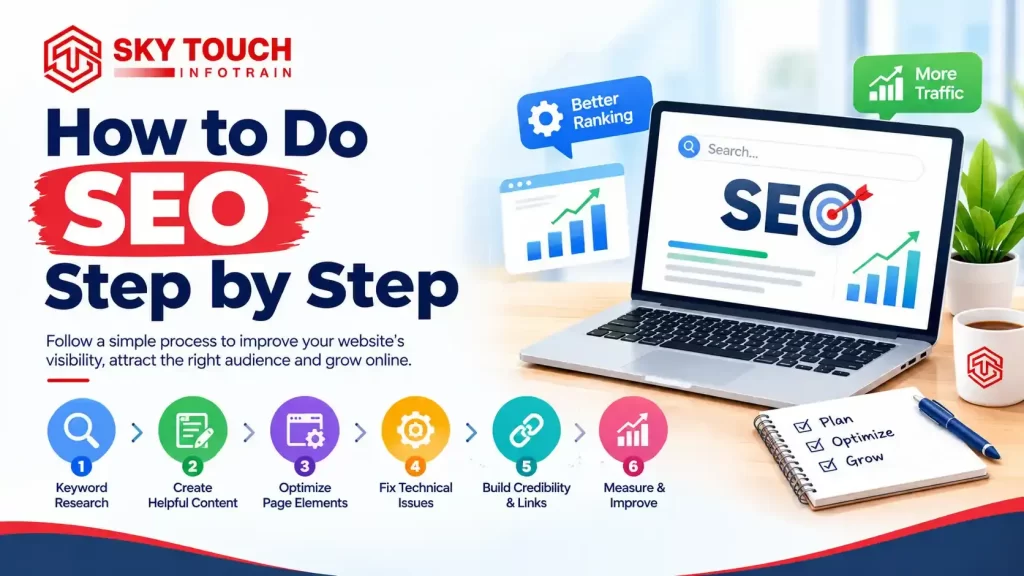
How to Do SEO Step by Step
Businesses do not need to change everything at once. A structured process makes it easier to identify priorities and measure progress.
Step 1: Research Keywords and Search Intent
Begin with the keywords your audience might be using to search for your products or services. This can be achieved by making use of google Keyword Tool, Google Search Console, as well as paid keyword research tools.
Know how to distinguish whether a query is informational, commercial, transactional, or navigational. Someone searching “what is search engine improvement” is looking for an explanation, but someone searching for an SEO agency is considering between providers.
Make different pages where searcher intent and the results you provide are inherently different.
Step 2: Create Helpful, Relevant Content
Answer the main question in an introduction, and then develop a discussion with examples, facts, and headings. Do not overuse the same keyword.
For any kind of informational article provide related questions action steps and comparisons that can help the reader decide. Find opportunities to add your own new information rather than paraphrasing what’s out there.
Step 3: Optimize Page Elements
Create a page title, a primary heading and a compelling meta description for each key page. Make the page scannable, use appropriate internal links and provide suitable image dimensions, and alt text.
Internal links should connect related topics naturally. For example, readers who want implementation support can visit the Search Engine Optimization service page to learn more about professional SEO services.
Step 4: Fix Technical Issues
Run through crucial URLs to identify the crawlability indexability proper code status, standard tags and mobile usability. Submit the proper xml sitemap to Google Search Console and examine priority URLs occasionally.
Sitemap helps discovery, but do not expect that submitting one will get it index. Do not block your valuable content with accidental robots. Txt rules or noindex tags.
Step 5: Build Credibility and Relevant Links
Post honest data, mention the writer, provide the right firm information, as well as cite a credible resource when it supports genuine facts.
Get links from genuinely useful resources industry relationships and original contributions. Avoid false claims fabricated testimonials and manipulative link-building practices.
Step 6: Measure and Improve Performance
Track impressions clicks click-through rates average position and index status through Google Search Console Track engagement and conversions through Google Analytics 4.
Monthly page data by review. Pages with high impressions but no clicks are potentially in need of more relevance to your search snippets. Pages with relevant traffic but not many inquiries are potentially in need of more relevance a noticeable call to action or quicker conversion.
Organic SEO vs Local SEO vs Technical SEO
These approaches serve different purposes, although they often work together.
| SEO approach | Main focus | Example |
| Organic SEO | Improving visibility for relevant non-paid search results | An article explaining search engine optimization |
| Local SEO | Reaching customers in a defined geographic area | A Noida service page for local customers |
| Technical SEO | Making pages accessible and understandable to search engines | Fixing an unintended noindex tag |
| On-page SEO | Improving individual page content and elements | Rewriting a page title and organizing headings |
A business may need all four approaches. The right priorities depend on its audience, website condition, services, and growth objectives.
How Long Does SEO Take to Show Results?
There’s no fixed time in which you should see SEO results. Some technical changes will allow the crawler to better find a page, but significant ranking and traffic growth will likely take a few months or more.
Timeline varies based on the competition, the authority of the website, the quality of the content indexing search demand, and the amount of work that has been done.
Use more than rankings as a benchmark for success. Gains in relevant impressions, non-branded clicks, qualified enquiries and conversions will help give a broader perspective of success.
Conclusion
Search engine tuning is a sustainable method of improving the online visibility of a site driving qualified website traffic and enabling business growth. It includes valuable content, search terms, on-page enhancement, technical SEO, an appropriate link profile and continual results assessment.
In India and USA, the key to having a good SEO plan is to get it to know your audience and create a website that is truly helpful to your audience. Skytouch Infotrain can use these principles to help businesses understand and improve their organic search presence through a structured approach to SEO.
Start by reviewing your most important pages, fixing technical barriers, and publishing content that answers real customer questions. Track the results, learn from the data, and improve your strategy consistently.
Frequently Asked Questions
What is search engine optimization in simple words?
Search engine Improvement or SEO is the process of making a website more accessible to search engines, then that means, more showable to the people who are searching for it.
Is SEO free?
There’s no cost to get a click to your site for organic search. SEO costs can include content writing, technical development, research tools, and agencies or consultants.
Can SEO help small businesses in India and the USA?
Yes. SEO will allow your business to reach the right audiences on both countries. The strategy will depend on your target market competition language, search intent and actual location of the service area.
Does publishing more content guarantee better rankings?
No. Adding more pages does not ensure higher rankings. Content that is useful accurate and original and that addresses the audience’s needs, is more valuable than publishing large volumes of repetitive material.
Can SEO help a website appear in AI-generated search answers?
Solid practices like providing a clear answer, trustworthy content, well-structured pages, and having real expertise on the page can help qualify and appear in AI-supported results, but a page appearing in an AI answer is not always guaranteed.
What Are the 4 Pillars of SEO?
The four primary pillars of SEO are technical SEO, on-page SEO, off-page SEO, and content tuning. Technical SEO focuses on boosting website accessibility, on-page SEO targets the improvement of specific pages, off-page SEO builds website credibility, and content tuning aims to address users’ search queries.
What Is the Difference Between SEO and SEM?
Search engine Improvement (SEO) is the technique of improving your search engine results for free, without paying for advertising, only in the organic or natural search results. Search engine marketing (SEM) is a term for promoting your website through search, paid search advertising is a common application.
How Do I Know If My SEO Strategy Is Working?
Best ways to track SEO rankings with google search console and google analytics 4 Search Console Track organic clicks impressions click-through rate, names of the relevant keywords, engaged visits and conversions. Make use of these data points to compare change over time so you can see what you’ve improved and what still needs work.
Why Is My Website Not Ranking on Google?
The site has pages that aren’t indexed, content that doesn’t match search intent, technical problems that restrict crawling, or competing pages that answer the question better. Examine Search Console data, ensure the content is good, and fix indexing/technical issues before making any more changes.
What Is Keyword Research in SEO?
What Is Keyword Research? Keyword research is used to identify what keywords people use to search for a particular keyword or object in an online search engine. This will help you understand the purpose of a search as well as how to develop useful content. Make sure that your web content is centered around your targeted audience by doing keyword research. You can determine the keywords using Google Search Console and Google Keyword Planner tool.
Is SEO Still Important for Businesses in 2026?
Yes. Search is still important, as the Internet is the way consumers research shop and compare what companies have to offer. If your content is helpful and your website is technically accessible, you show expertise and meet user needs, you’ll help support your organic presence in traditional and AI search. You’ll never, yet, “guarantee” rankings or inclusion in answers.